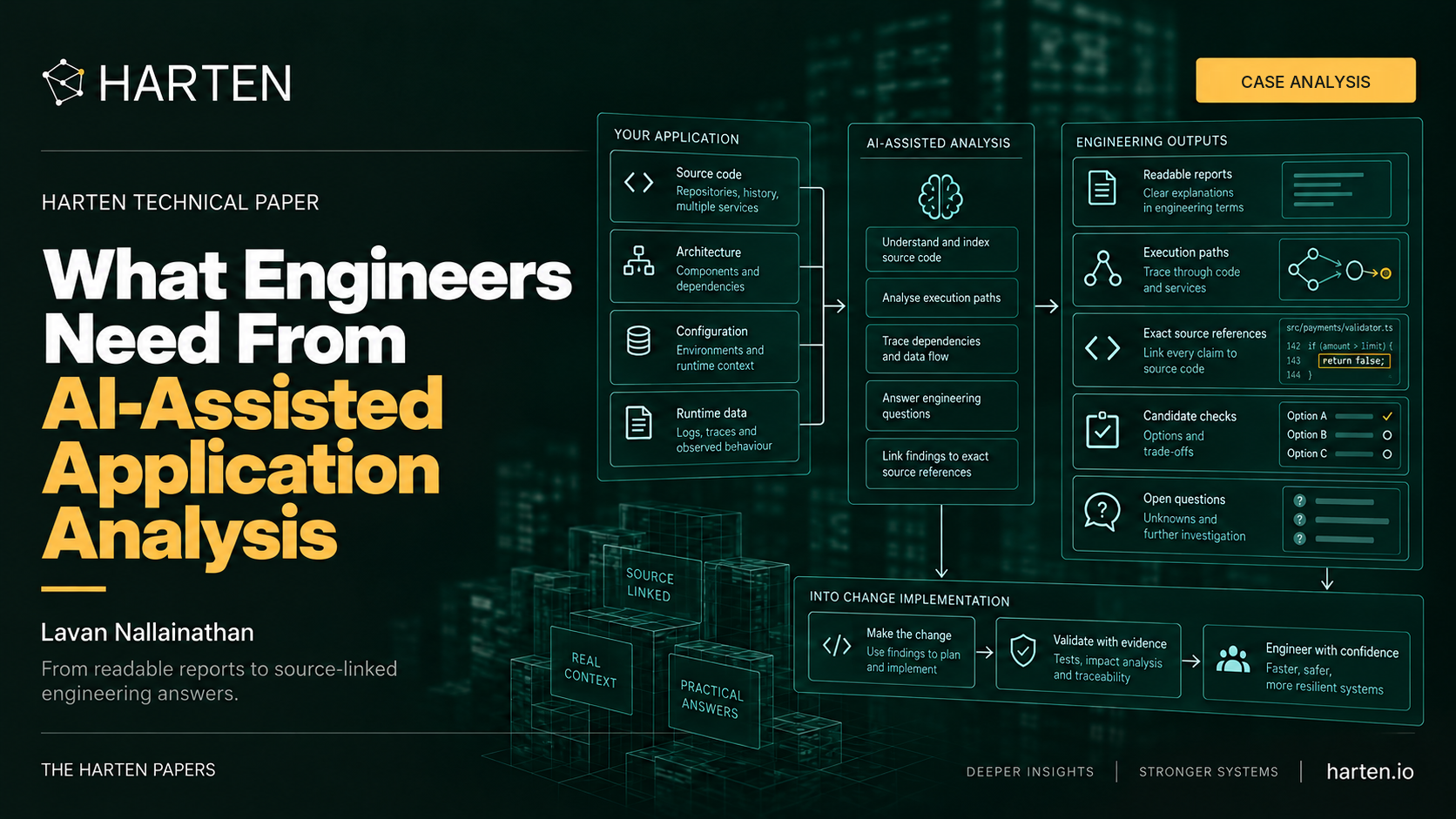
Six PRSD-IWS examples show how source-linked findings help engineers preserve behaviour, investigate uncertainty and define meaningful tests for AI-assisted software change.
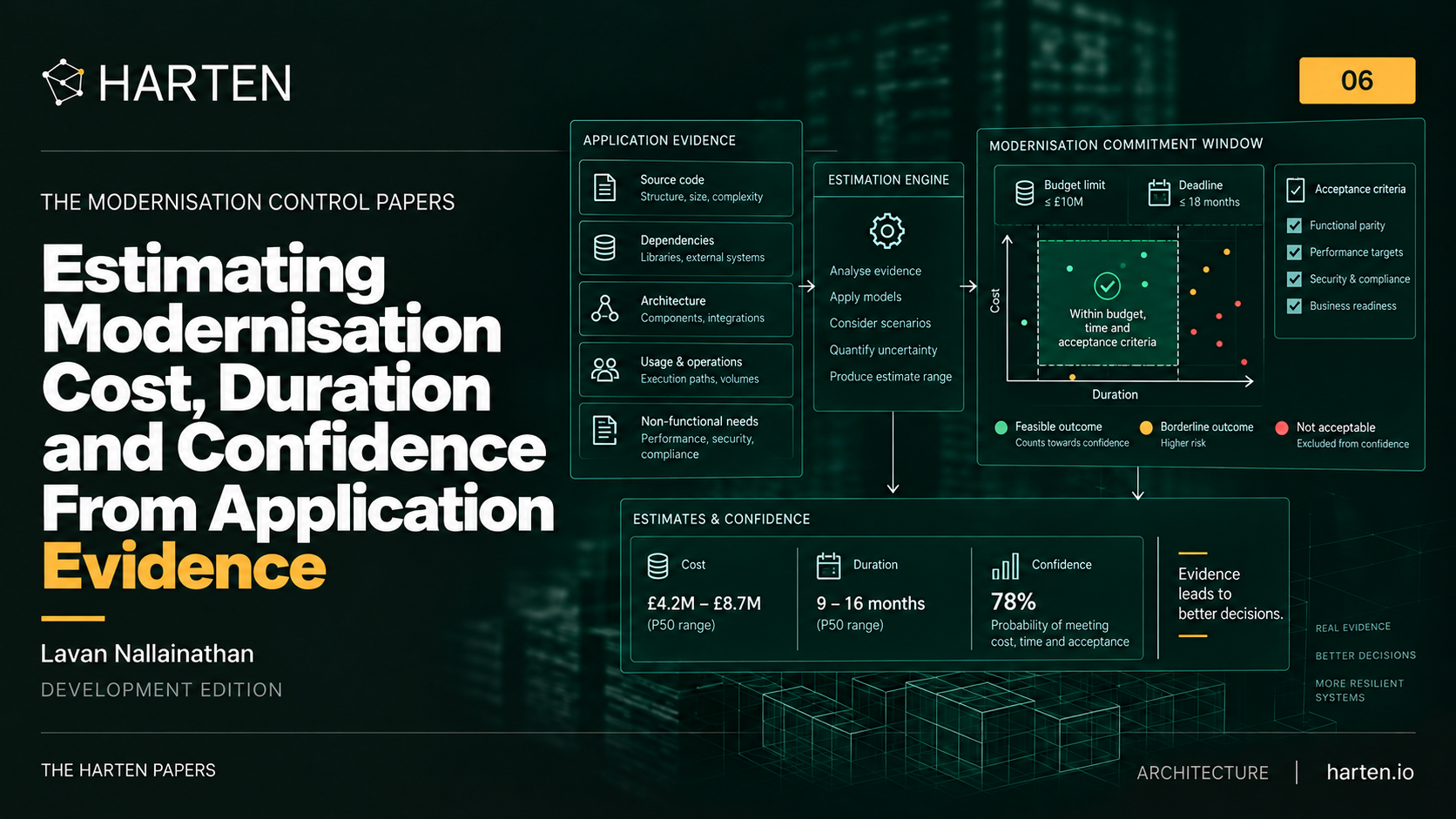
A proposed evidence-linked model for assessing whether a modernisation plan can meet its budget, deadline and acceptance criteria, grounded in Harten's public PRSD-IWS analysis and one-week analysis objective.
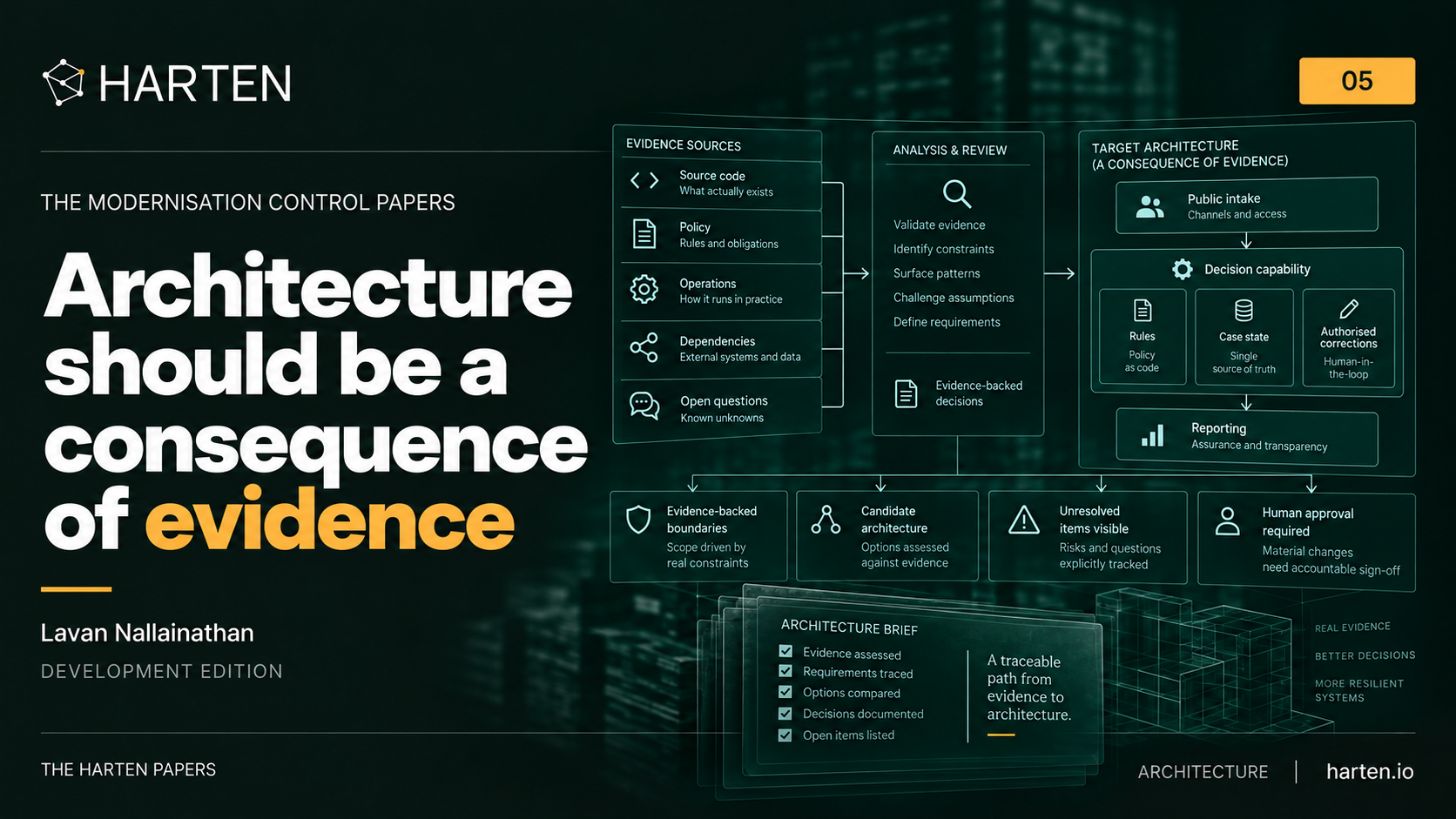
An eligibility-service example shows how evidence can support a greenfield replacement rather than recreating the legacy architecture, and why production transfer still requires independent verification and human approval.
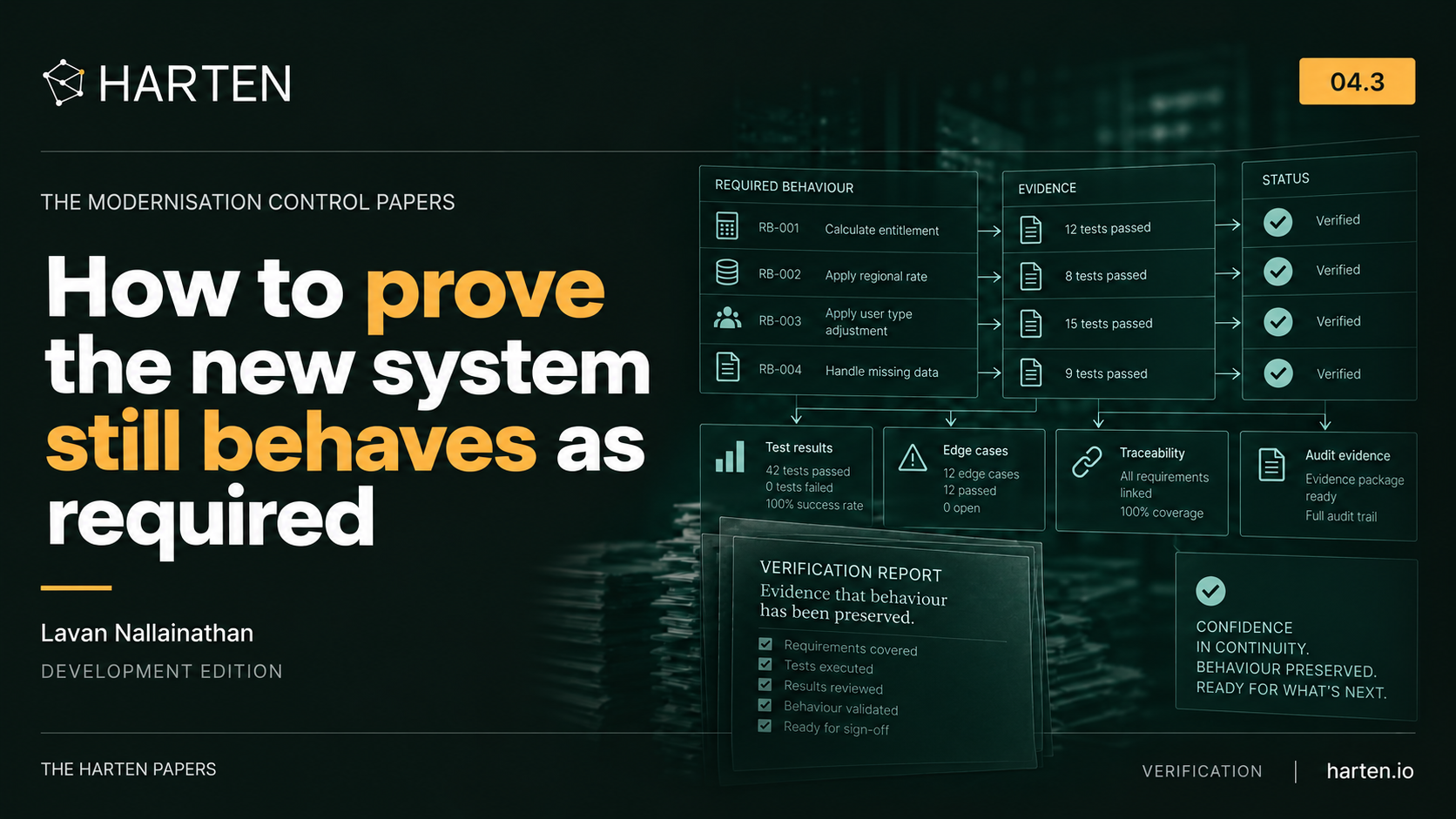
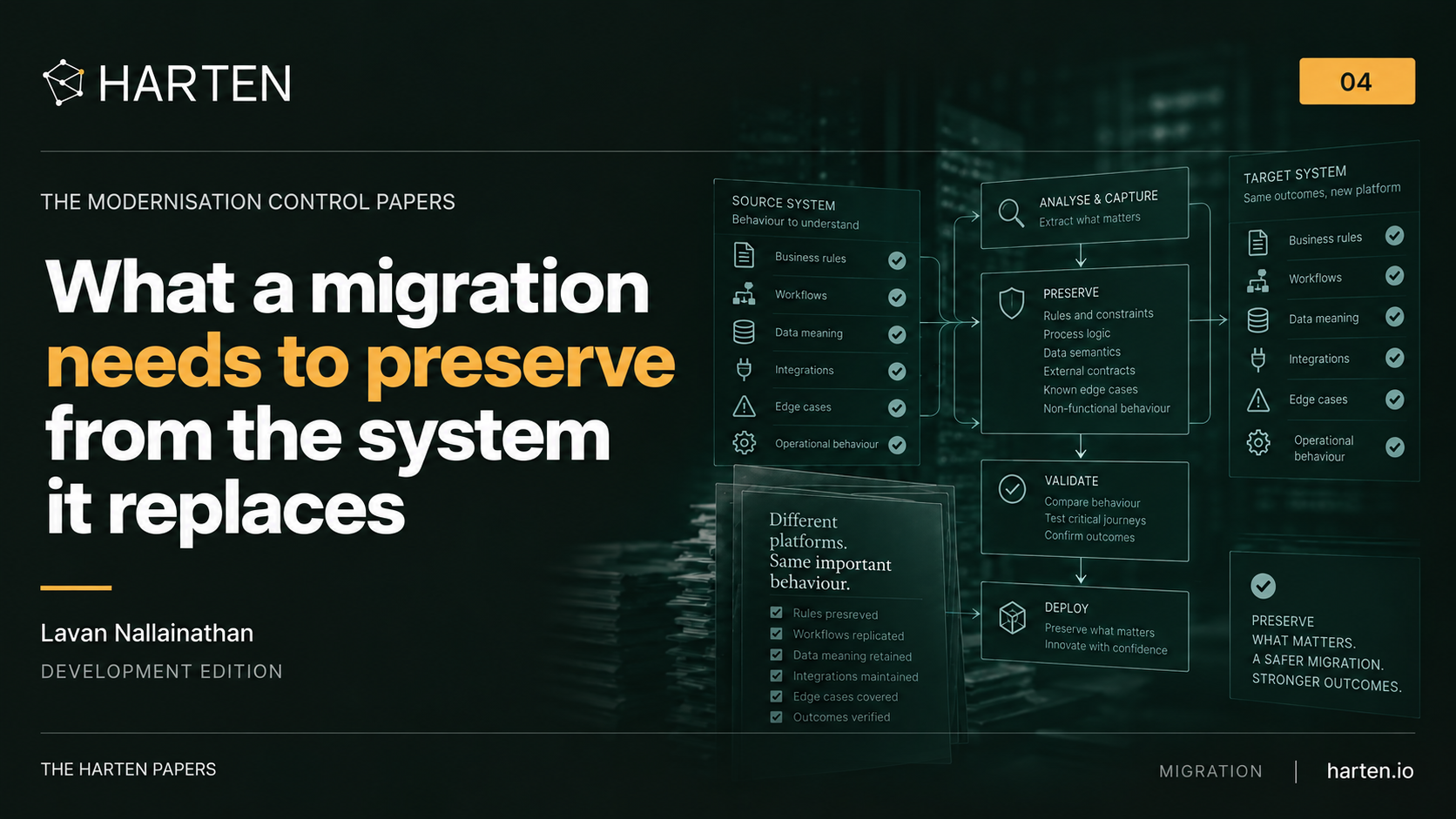
Migration verification should check the new system against the behaviour the organisation decided to preserve, including exceptions and deliberate changes, rather than assuming the old implementation is always the correct oracle.
An order can appear cancelled in one system while the warehouse still dispatches it. Understanding that failure helps us specify what a replacement must guarantee without recreating the old implementation.
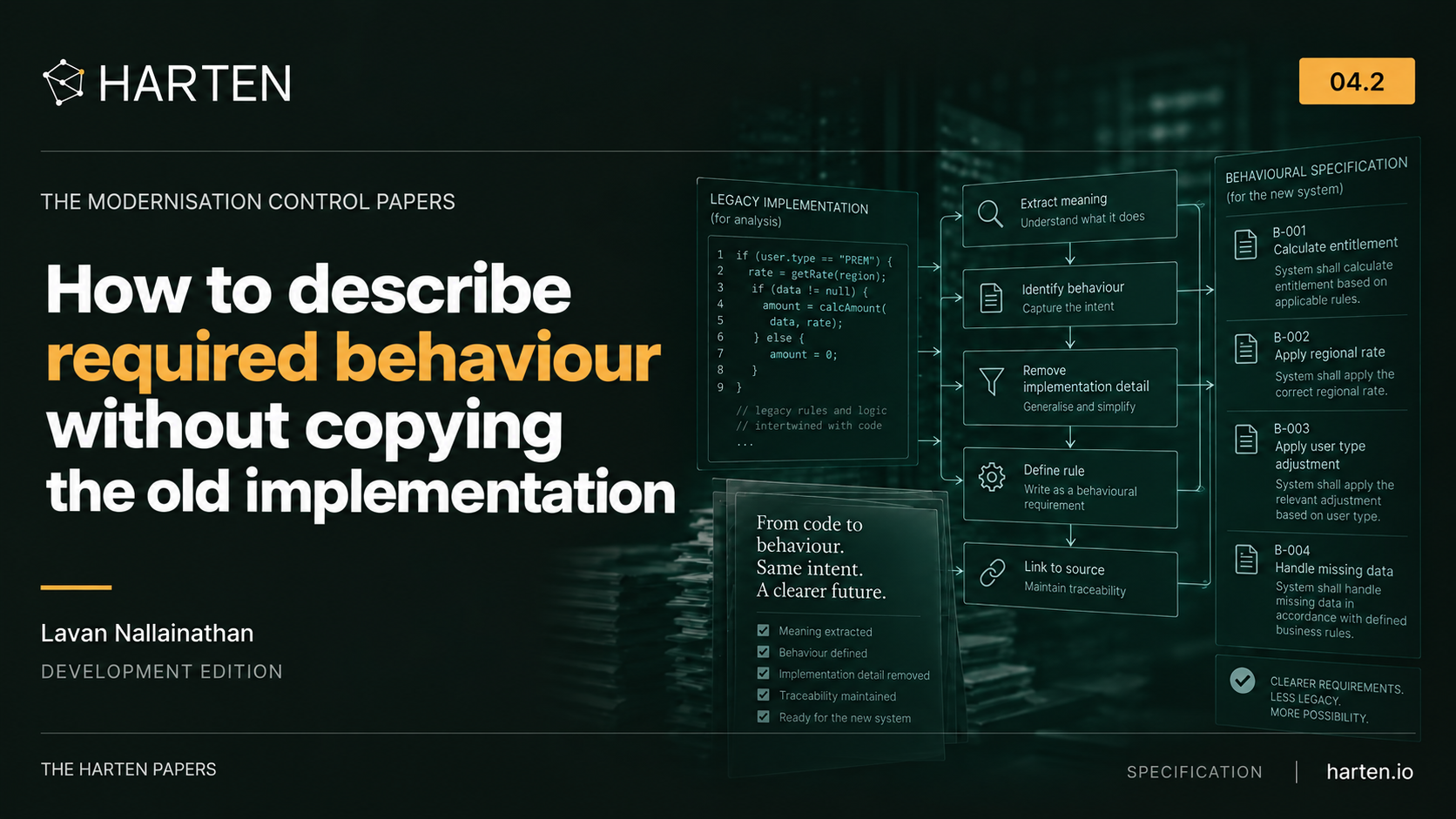
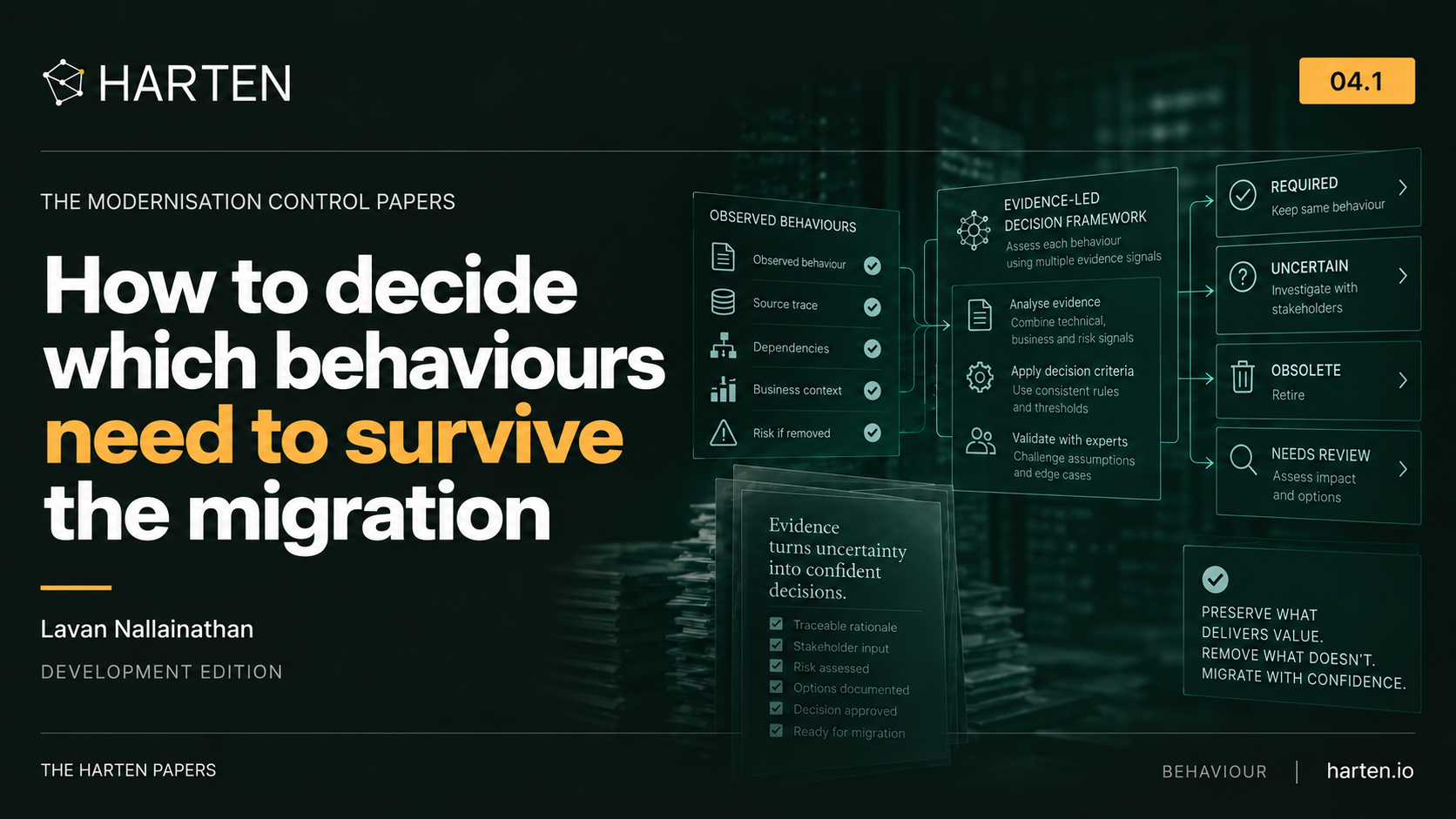
Before rebuilding an application, teams need to decide which outcomes, rules and controls still matter and which parts of the current system should be allowed to disappear.
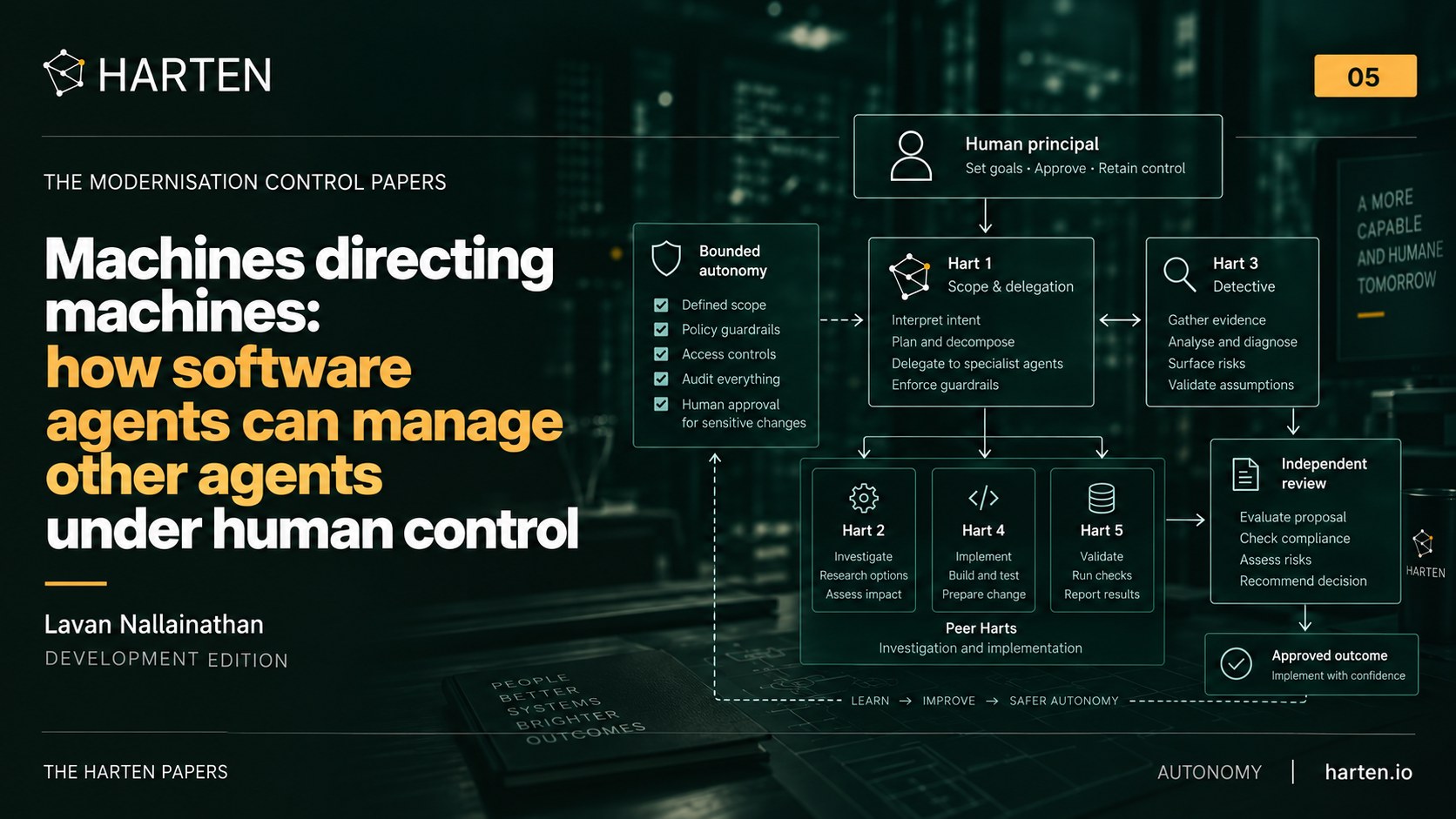
An empirical Harten case study of software agents coordinating other software agents while durable doctrine keeps consequential decisions, scope changes and acceptance of risk with the human principal.
When AI contributes to a software decision, the useful output is not just the answer. Teams need to see what was found, what supports it, what remains unresolved and where a person still needs to decide.
AI systems can produce convincing answers without establishing why those answers should be trusted. Evidence connects claims to sources, scope, uncertainty and the decisions that depend on them.
A public benchmark using NightingaleHQ's MIT-licensed mixed legacy example corpus: what MaaS could establish in approximately an hour, what it left unresolved, and why the gaps matter.
18 September 2026
The Harten Papers · Empirical follow-on — 16 September 2026
Discovery should distinguish what an application does, what the organisation needs and what it has authorised someone to change. That distinction connects application understanding to a defensible modernisation decision.
An empirical case study of evidence-bearing distributed termination: how autonomous engineering agents can establish that shared work is complete rather than merely report that their local task has finished.
An empirical case study of autonomous software-engineering agents coordinating shared mutable state through explicit invariants, state-dependent evidence and minimum necessary serialisation.
An evidence-directed approach to reconstructing complex software systems, compressing application discovery and directing human attention to the uncertainties that still require judgement.
Roughly six hours of essentially autonomous engineering execution, with human review and decisions on direction. A working observation from building Harten.
Legacy systems become expensive to change when the organisation loses reliable knowledge of how they actually work, where behaviour lives and what a change may affect.
Long-running AI systems need durable state outside the model context if decisions, evidence and engineering intent are expected to survive compaction and continue reliably over time.
Safe autonomous change depends on evidence-backed understanding across code, operations, people and policy. That understanding must preserve provenance, uncertainty and conflicting perspectives.
Human oversight cannot scale by requiring a person to inspect every machine action. Human authority must scale by concentrating judgement where evidence, uncertainty and consequence require it.
AI makes software production dramatically faster, but velocity does not establish whether a change is understood, justified or safe. As generation gets cheaper, confidence becomes scarce.
AI is reducing the cost of producing software change. The scarce capability is increasingly the evidence, authority and control required to decide which changes are justified.